Industry Insight: Deep Dive into FDA's Palm Leaf Dinnerware Ban and Sustainable Alternatives
- Share
- publisher
- YADA Industrail
- Issue Time
- Apr 30,2026
Summary
The FDA banned the import and sale of Areca catechu palm leaf dinnerware in May 2025 due to potential leaching of harmful alkaloids like arecoline, posing health risks. This article delves into the ban's background and recommends safer wooden and bamboo alternatives.
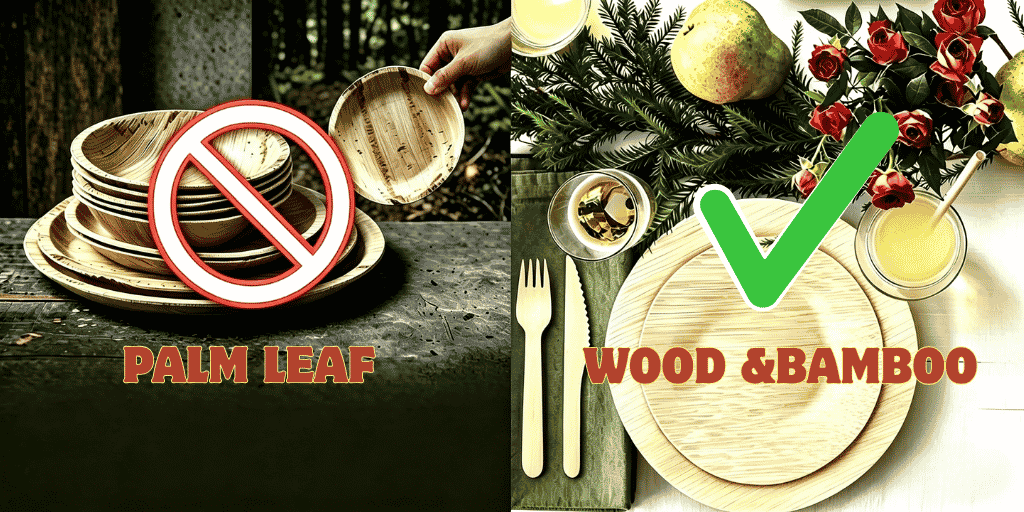
Deep Dive into FDA's Palm Leaf Dinnerware Ban and Sustainable Alternatives
FDA Ban: Health Concerns Beneath a Sustainable Facade
In May 2025, the U.S. Food and Drug Administration (FDA) issued a significant ban, prohibiting the import and sale of dinnerware made from Areca catechu palm leaf sheaths within the United States. This action marks a further tightening of food contact material safety standards and serves as a wake-up call for the global catering and packaging industries. Previously, these palm leaf dinnerware products were highly popular in takeout, catering, and event settings due to their natural, biodegradable properties, often perceived as an ideal choice for sustainable dining. However, the FDA's latest assessment has revealed hidden health risks associated with them.
Scientific Basis: The Health Threat of Alkaloid Migration
The FDA's ban is not arbitrary; it is based on rigorous scientific testing and evaluation. Research indicates that naturally occurring alkaloids in Areca catechu palm leaves, particularly arecoline and arecaidine, pose a risk of migrating into food upon contact. These alkaloids are abundant in betel nuts, and their health effects have been extensively studied by the World Health Organization's International Agency for Research on Cancer (IARC). As early as 2004 and 2012, IARC assessments linked betel nut chewing to various health issues, including carcinogenicity. While these earlier studies primarily focused on the consumption of betel nuts, the FDA has adopted a precautionary principle, extending its concern to food-contact surfaces made from the same plant material.
Specifically, arecoline was classified by IARC in 2020 as a Group 2B carcinogen (possibly carcinogenic to humans). It is not only associated with an increased risk of various cancers, including oral, pharyngeal, esophageal, liver, and uterine cancers, but can also exert toxic effects on multiple organ systems and even lead to addiction. Given these potential health hazards, the FDA concluded that dinnerware made from Areca catechu palm leaf sheaths does not meet the criteria for
"Generally Recognized as Safe (GRAS)" for food-contact materials. Consequently, these products have been placed under Import Alert 23-15, strictly limiting their circulation in the U.S. market.
Industry Impact and Future Outlook
This ban will undoubtedly have a profound impact on global catering businesses and suppliers that rely on such products. Many palm leaf dinnerware suppliers, who once marketed their products as "eco-friendly," are now adjusting their product lines towards other safe and compliant alternatives. This development urges the entire industry to re-evaluate its supply chains and accelerate the transition to truly sustainable and harmless materials.
For catering businesses committed to sustainability and food safety, selecting appropriate alternatives is crucial. We strongly recommend considering the following proven environmentally friendly and safe materials:
| Alternative Material | Advantages | Applicable Scenarios | Safety | Sustainability |
| Wooden Tableware | Natural, biodegradable, aesthetic, durable | Restaurants, cafes, takeout, picnics | High, no harmful substance migration | High, from sustainable forestry |
| Bamboo Products | Fast-growing, biodegradable, lightweight, sturdy | Fast food, takeout, events, home use | High, no harmful substance migration | Very High, renewable resource |
Wooden cutlery & bamboo cutlery not only meet consumer demand for environmental protection but also ensure food contact safety, mitigating potential health risks. When choosing sustainable catering solutions, businesses should prioritize the safety, traceability, and compliance of materials with international food contact standards, to collectively build a healthier and greener future.