What Should Buyers Look for in a Hygienic Wooden Products Manufacturer?
- Share
- publisher
- YADA Industrial
- Issue Time
- Nov 20,2026
Summary
A buyer's guide to auditing hygiene at a wooden cutlery and ice cream sticks factory, covering material transfer, separate buffer rooms, UV disinfection and food-contact compliance.
Most factory visits focus on production lines, polishing equipment and packing areas. Hygiene management often receives less attention, even though disposable wooden cutlery and ice cream sticks are intended for direct food contact. This guide outlines seven practical checks buyers can use when auditing a wooden products manufacturer, with examples from YADA Industrial’s production facility.
Hygiene at a wooden cutlery and ice cream sticks factory depends on more than a clean-looking floor. Buyers should evaluate four areas: how raw materials enter production, whether incoming and outgoing materials are handled separately, how cleaning and UV disinfection are managed, and whether daily procedures are documented. A reliable manufacturer should be able to explain its procedures and provide supporting records rather than rely on general claims about workshop cleanliness.
- Dedicated buffer rooms separate incoming raw materials, auxiliary materials and outgoing finished products.
- UV disinfection is an additional hygiene measure; its effectiveness depends on equipment specifications and operating conditions.
- YADA Industrial operates three dedicated buffer rooms on the second floor, each with UV disinfection lamps.
- The second-floor workshop gets about 30 minutes of UV exposure after personnel leave each working day.
- When auditing a supplier, review cleaning records, disinfection procedures, equipment specifications and product test reports.
YADA Industrial’s Hygiene Arrangements at a Glance
| Hygiene Area | YADA Industrial’s Practice |
|---|---|
| Raw material transfer | Materials are transported to the second floor by elevator through a designated route. |
| Raw material handling | A dedicated raw material buffer room equipped with UV disinfection lamps. |
| Auxiliary material handling | A separate auxiliary material buffer room equipped with UV lamps. |
| Finished product handling | A dedicated finished product buffer room with UV treatment. |
| Daily workshop hygiene | About 30 minutes of UV exposure after personnel leave the second-floor workshop. |
These arrangements form part of YADA Industrial’s hygiene management system. The following sections explain why each measure matters and what buyers should check when evaluating a supplier.
How Should Raw Materials Enter a Food-Contact Production Area?
Short answer: Raw materials should follow a defined transfer route and pass through an appropriate transition area before entering the production workshop.
Wood and bamboo materials are usually stored away from the main production area, and during transport they can pick up dust and outdoor contaminants. A controlled transfer route limits unnecessary exposure and makes material entry easier to manage.
Buyers should ask:
- Is there a designated route from storage to the production workshop?
- Are materials protected during transportation?
- Do materials pass through a buffer area before entering production?
- Are incoming materials kept separate from waste and outgoing finished products?
How YADA Industrial Handles Raw Material Transfer
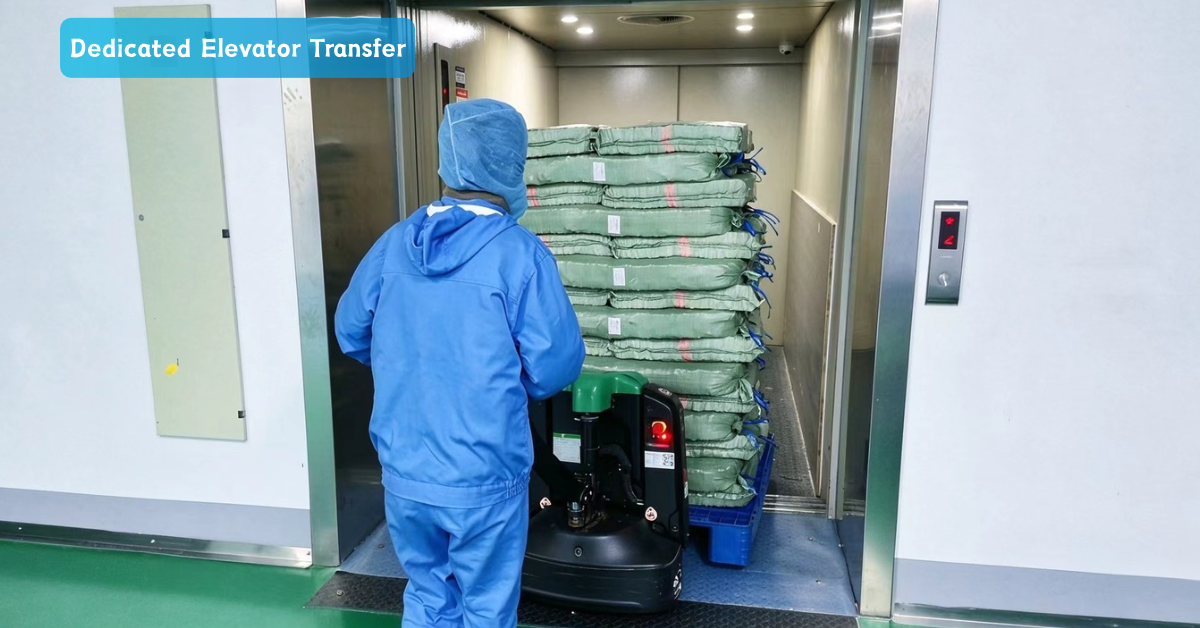
At YADA Industrial, raw materials are moved to the second-floor production area by elevator and pass through a dedicated raw material buffer room with UV disinfection lamps before entering the workshop. During a factory visit, buyers can ask to see this transfer route and how materials are handled beforehand.
Why Should Raw Materials, Auxiliary Materials and Finished Products Have Separate Buffer Areas?
Short answer: Different materials have different handling requirements. Separating their transfer routes helps reduce unnecessary contact and cross-contamination risks.
Raw materials (incoming wood and bamboo), auxiliary materials (packaging and production supplies) and finished products (wooden spoons, forks, knives and ice cream sticks) move through different stages of production. A single general-purpose transfer area makes material management harder.
How YADA Industrial Separates the Three Material Flows
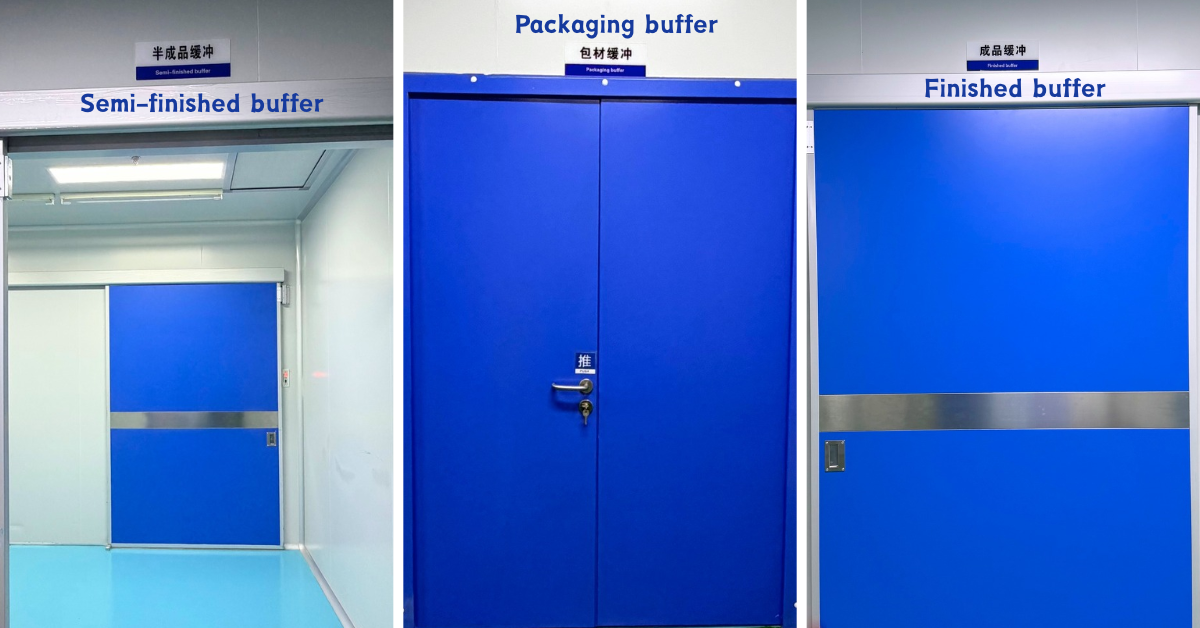
YADA Industrial runs three dedicated buffer rooms on the second floor:
- Raw Material Buffer Room — for incoming wood and bamboo before they enter production; UV disinfection lamps installed.
- Auxiliary Material Buffer Room — for auxiliary materials and supplies; separate from the raw material room and also UV-equipped.
- Finished Product Buffer Room — for finished products before they leave production; UV treatment applied.
What matters is not simply having separate rooms, but that each room has a clearly defined function and is used consistently.
What Should Buyers Know About UV Disinfection in a Factory?
Short answer: UV disinfection is an additional hygiene measure that can help reduce microorganisms on exposed surfaces. Its effectiveness depends on equipment specifications, exposure conditions and surface accessibility.
UV light can damage the genetic material of microorganisms, but installing lamps does not guarantee a particular result. Five factors affect how UV treatment works in practice.
- UV Lamp Specifications Check the lamp type, wavelength and manufacturer’s specifications rather than assuming all UV equipment performs the same way.
- Irradiance and Exposure Time Effectiveness depends on the UV energy reaching the target surface and the duration of exposure.
- Distance and Surface Accessibility UV has limited reach behind packaging, equipment, stacked materials or other obstacles.
- Surface Cleanliness Dust and organic residues can shield microorganisms, so cleaning still matters alongside UV treatment.
- Lamp Maintenance Performance changes over time; ask whether specifications, operating hours and maintenance are documented.
How YADA Industrial Applies UV Disinfection
UV lamps are installed in all three buffer rooms, and the second-floor workshop gets about 30 minutes of UV exposure at the end of each day, switched on after personnel leave and off after the treatment period. UV is an additional control measure, not a replacement for cleaning, dust management and material handling.
Questions to ask when auditing a manufacturer:
- What type of UV equipment is installed?
- Which areas receive UV treatment?
- What are the equipment specifications and operating conditions?
- How are lamp operation and maintenance managed?
- Is there documented evaluation of UV effectiveness under actual conditions?
How Should Finished Products Be Handled After Production?
Short answer: Finished products should have a designated handling and transfer area, separate from incoming raw materials.
Hygiene does not end when production stops. Finished wooden spoons, forks, knives and ice cream sticks still need transferring and preparing for packaging or storage. If they pass through the same areas as incoming raw materials, cross-contamination risk rises.
Buyers should check:
- Is there a dedicated finished product transfer area?
- Are finished goods separated from incoming raw materials?
- Is the route for outgoing products clearly defined?
- Are hygiene measures applied before finished products leave production?
YADA Industrial’s Finished Product Handling
At YADA Industrial, finished products pass through a dedicated finished product buffer room with UV disinfection before leaving the production area. For importers and distributors, it is worth checking whether a manufacturer’s hygiene management extends beyond the production line to finished goods.
What Does Daily Workshop Hygiene Management Include?
Short answer: A consistent hygiene routine should cover cleaning, dust control, waste removal, personnel practices and documented disinfection procedures.
A practical routine should address:
- Workshop cleaning — frequency, responsible personnel and records.
- Dust control — managing wood dust from cutting, sanding and polishing.
- Waste removal — regular removal through designated routes.
- Personnel practices — workwear, hand hygiene and controlled movement.
- Pest control — routine monitoring and documentation.
- Disinfection procedures — defined schedules and records.
Buyers should not only ask whether these procedures exist, but whether they are followed during normal production.
YADA Industrial’s Daily UV Procedure
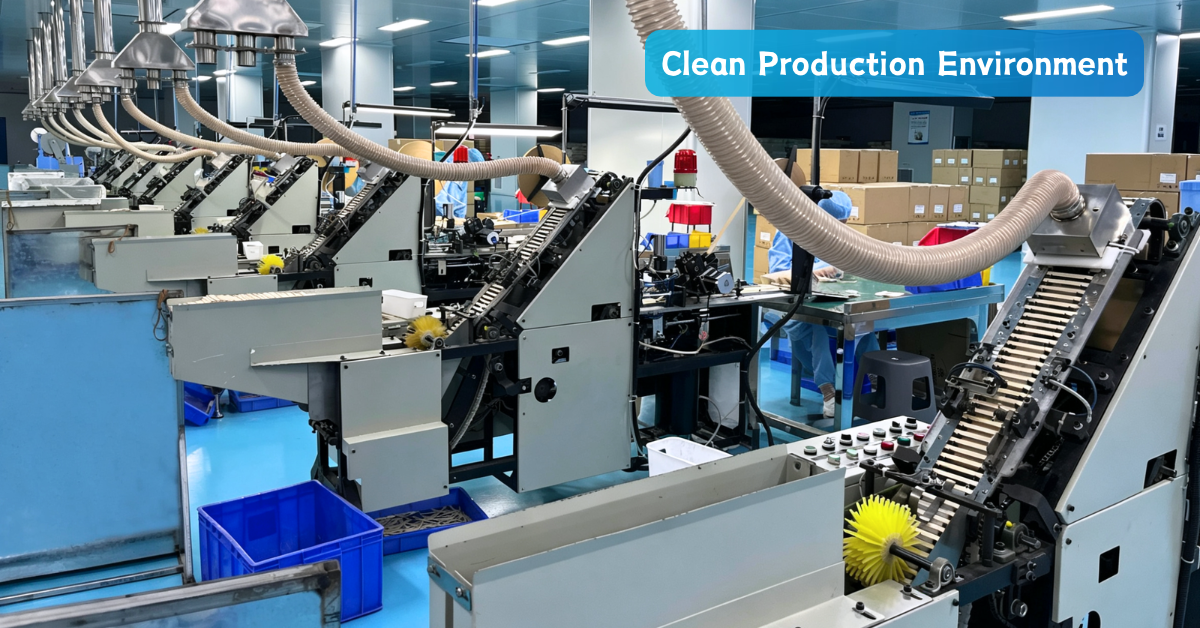
At the end of each working day, after personnel leave, UV lamps run for about 30 minutes. Reviewing actual procedures and records shows how hygiene is managed over time.
Which Standards and Regulations Should Buyers Consider?
Short answer: Buyers should evaluate food-contact requirements in their destination markets, together with relevant factory management certifications and product test reports.
Wooden cutlery and ice cream sticks are food-contact products, so buyers should know which regulatory requirements apply to their markets. The following are important references.
| Standard or Regulation | Main Area of Relevance |
|---|---|
| US FDA regulations (21 CFR) | Requirements applicable to food-contact materials and articles. |
| EU Regulation (EC) No 1935/2004 | General framework for materials and articles intended to contact food. |
| EU Regulation (EC) No 2023/2006 | Good manufacturing practice for food-contact materials and articles. |
| Germany’s LFGB | German food and feed legislation, including food-contact requirements. |
| ISO 9001 | Quality management systems. |
| BRCGS | Food safety and manufacturing management within its certification scope. |
| FSC Chain of Custody | Chain-of-custody certification for responsibly sourced wood materials. |
Source Hygienic Wooden Cutlery and Ice Cream Sticks
Work with a manufacturer that documents its hygiene procedures, from material transfer to daily disinfection.
Contact YADA IndustrialExplore Wooden Cutlery